Bittersweetness: On two years without Dad, a trip to New York, and a new book about to be born
My second novel, focusing on end-of-life care for the indigent elderly, will be published in 2027. I think my father would have liked this one better than my novel about journalism.

This time last year we were in New York City celebrating the release of my first novel.
There was a reading at a quirky bookstore in Brooklyn, and then, on a sunny Sunday afternoon in Prospect Park, two days after the one-year anniversary of my father’s death, we enjoyed a wonderful Mother’s Day picnic with my daughters and their families, eleven of us altogether. The picnic spread was a cornucopia of cheeses, olives, deli meats, fruits, chocolate cookies, and champagne. As we toasted the moms I looked around and said, “Grandpa would’ve loved this.” Family all around, having fun.
He definitely would have. I ponder that as my second novel Carson McClintock Is Not Dead Yet—about end-of-life care for the indigent elderly—wends its way toward publication in May 2027 by the excellent indie press Heliotrope Books of Manhattan.
And I realize: it feels bittersweet.
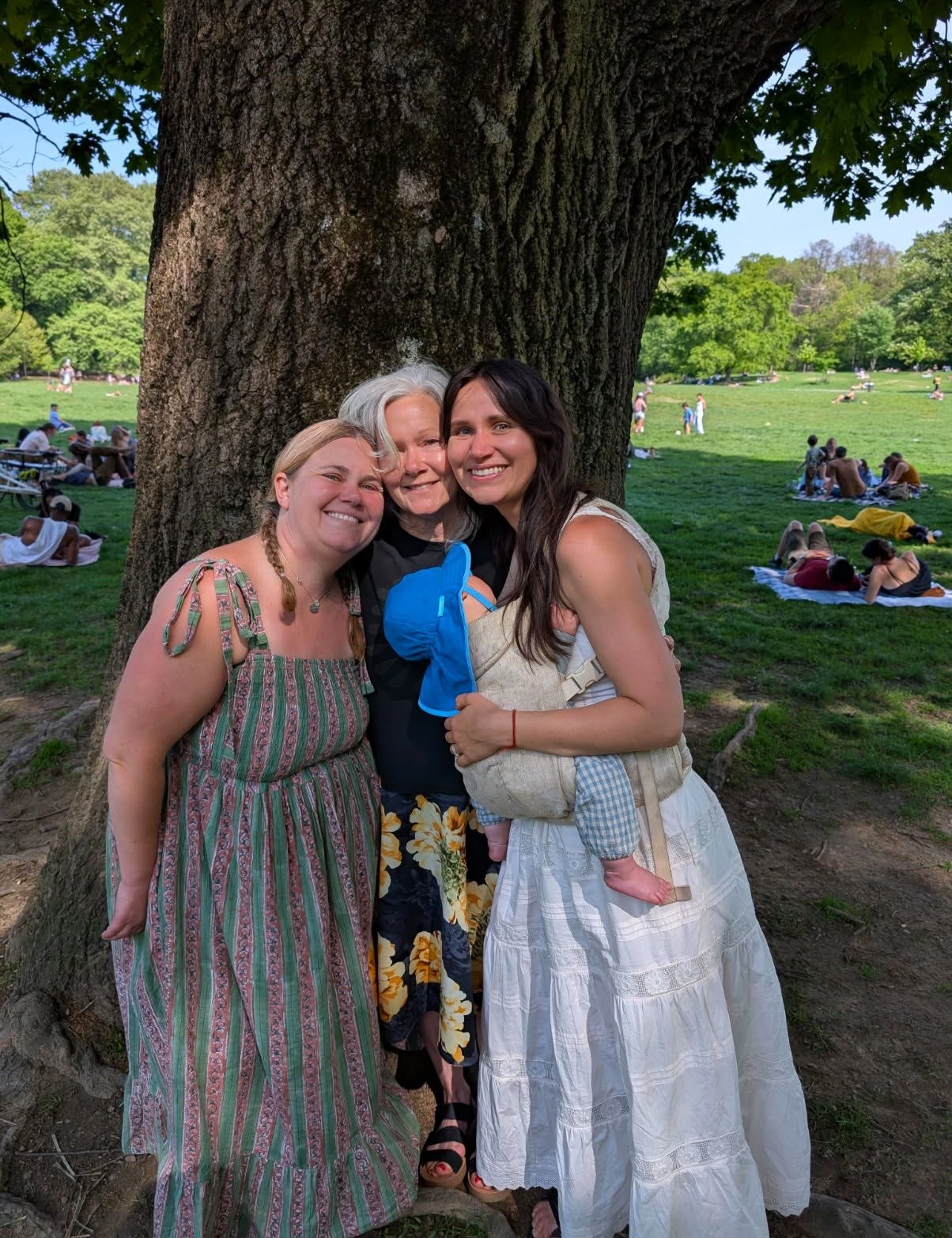
Prospect Park in Brooklyn with my two daughters (and one grandson), Mother’s Day 2025.
As of this morning at around 8:20, two full years have passed since Dad slipped into the space of infinite celestial energy, where his atoms bounce off the atoms of his ancestors and those of assorted loved ones whose time on earth expired before his. Durwood Elbridge Lashbrook has been part of the eons for seven-hundred-thirty days. Potent memories are what is left of him for me.
His spirit shines in a faded photograph, taken on a real camera, a Canon as I recall. The image is a treasure, somehow more him than either of the framed portraits on my dresser of him in his Navy uniform, young, dashing, and shipshape.
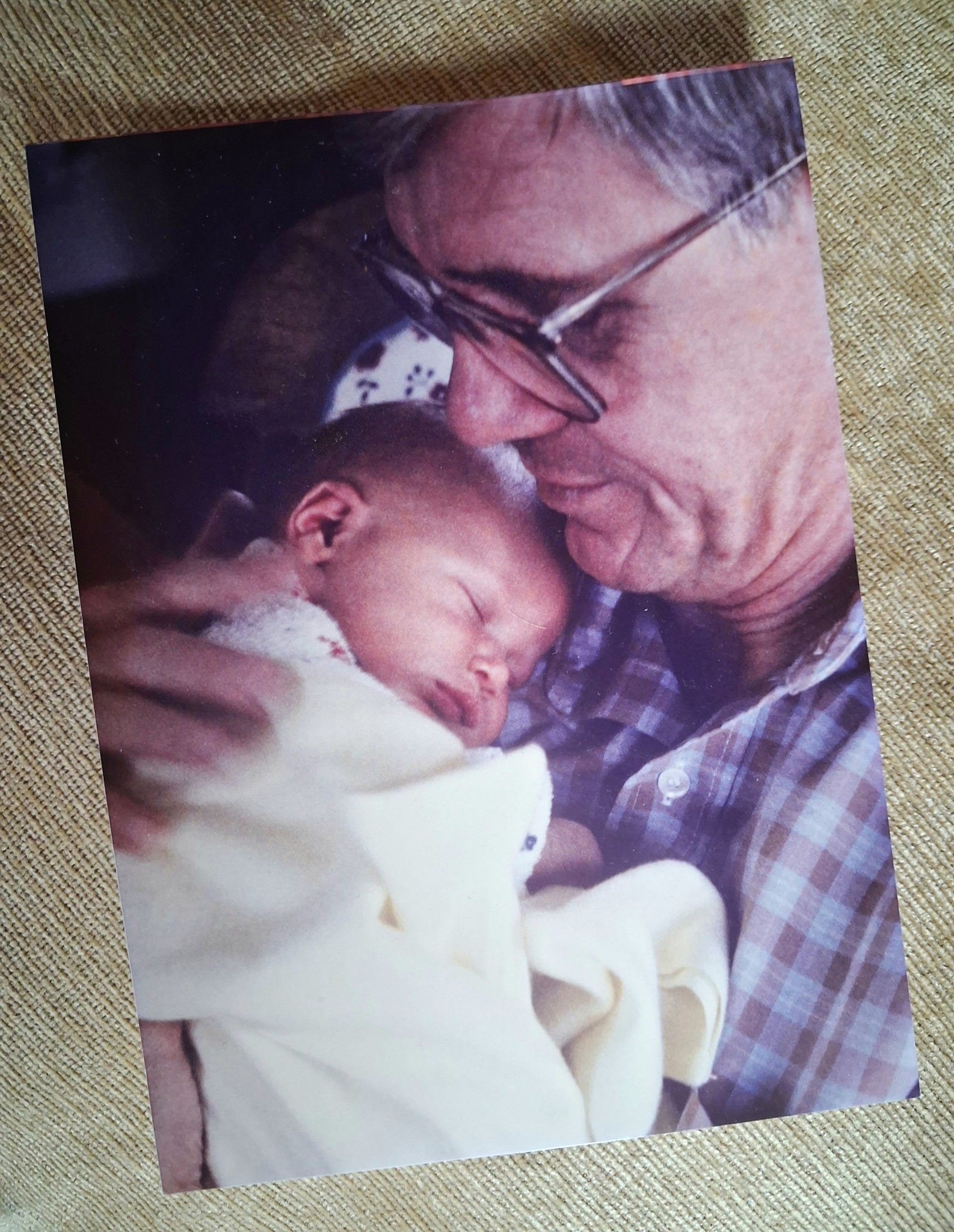
My dad with a newborn Lindsey Ann Krieves, the first of his nine grandchildren, in 1986.
In the photo Dad is fifty-five. He is cradling his first grandchild, my eldest daughter Lindsey. She is buttercup-blanket-swaddled and newborn-baby-asleep, her round, peach fuzz-covered head resting against his plaid cotton shirt, burgundy, blue, and gray. He is smiling a small smile. It looks like he’s patting her back. He is utterly in love with this brand-new being. The tenderness is palpable.
Pure love. Pure possibility. All in.
*
The dedication page in my journalist novel Sunshine Girl, the one Dad knew about but never got to read—“He wouldn’t have liked it anyway,” I’ve shrugged to friends, because it leans left and my dad was quite right—says he always expected the best of me and sometimes got it. Dad used to joke—with a twinkle in his eye—that he didn’t know how he’d raised such a liberal daughter. He’d say that wearing a grin that told me it was okay that he was Hannity and I was Maddow, that I was Politico and Mother Jones and he was Fox News and Judicial Watch. He’d say it with humor and suspended disbelief. He’d say it in a way that told me he would be in my corner, always.
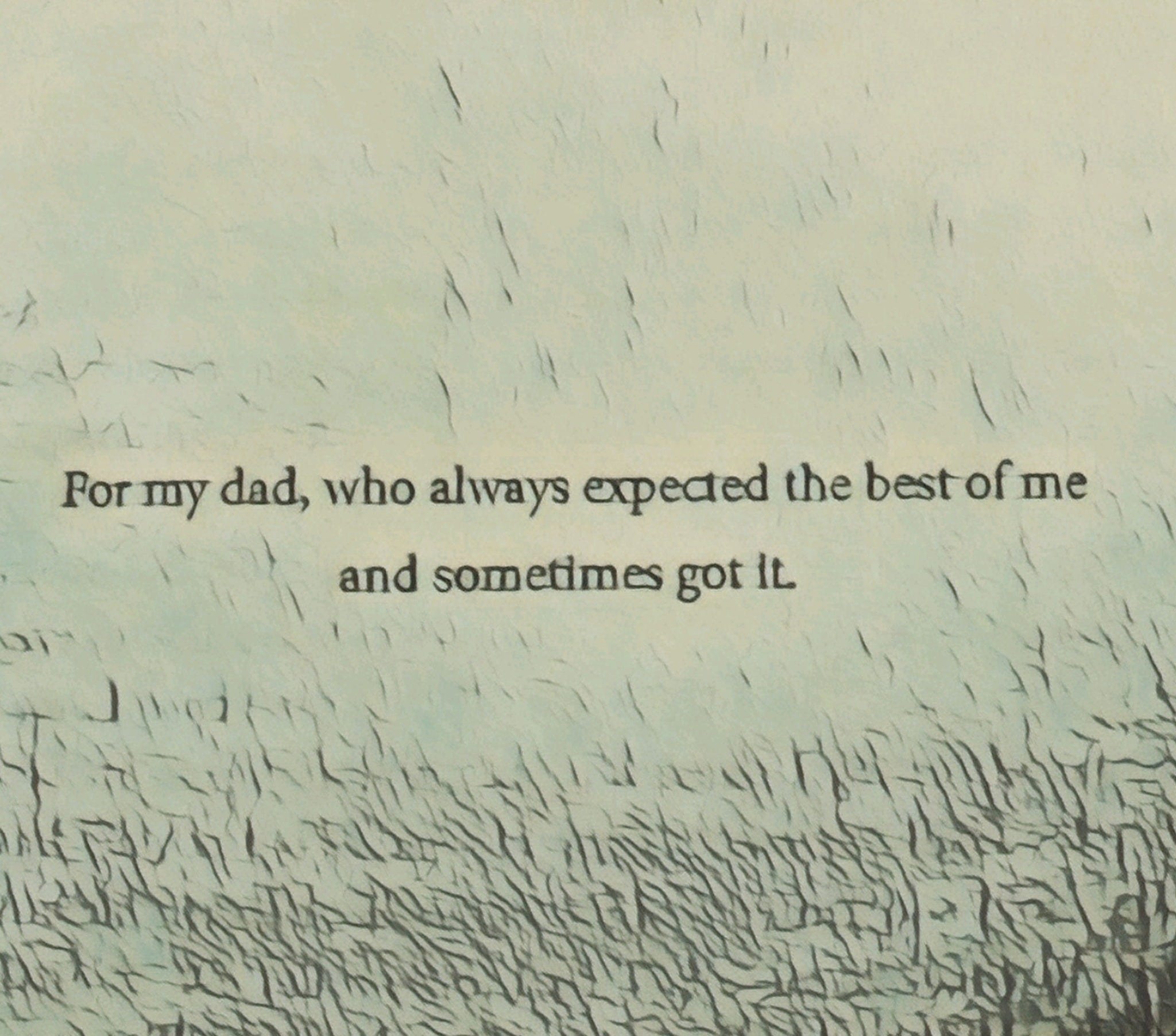
The words that came to me when I sat down to write the dedication for Sunshine Girl.
Writer friend Joanna Rose, one of several people who generously endorsed this exploration of paths toward the infinite, described the new novel as “an exuberant engagement with life, death, and possibilities” and called my storytelling “whip smart and quick, funny and tragic, mystical and earthy.” How cool is that? Dad would have appreciated it, I think, for its genuine interest in what someone might experience when life’s light fades, flickers, and goes out.
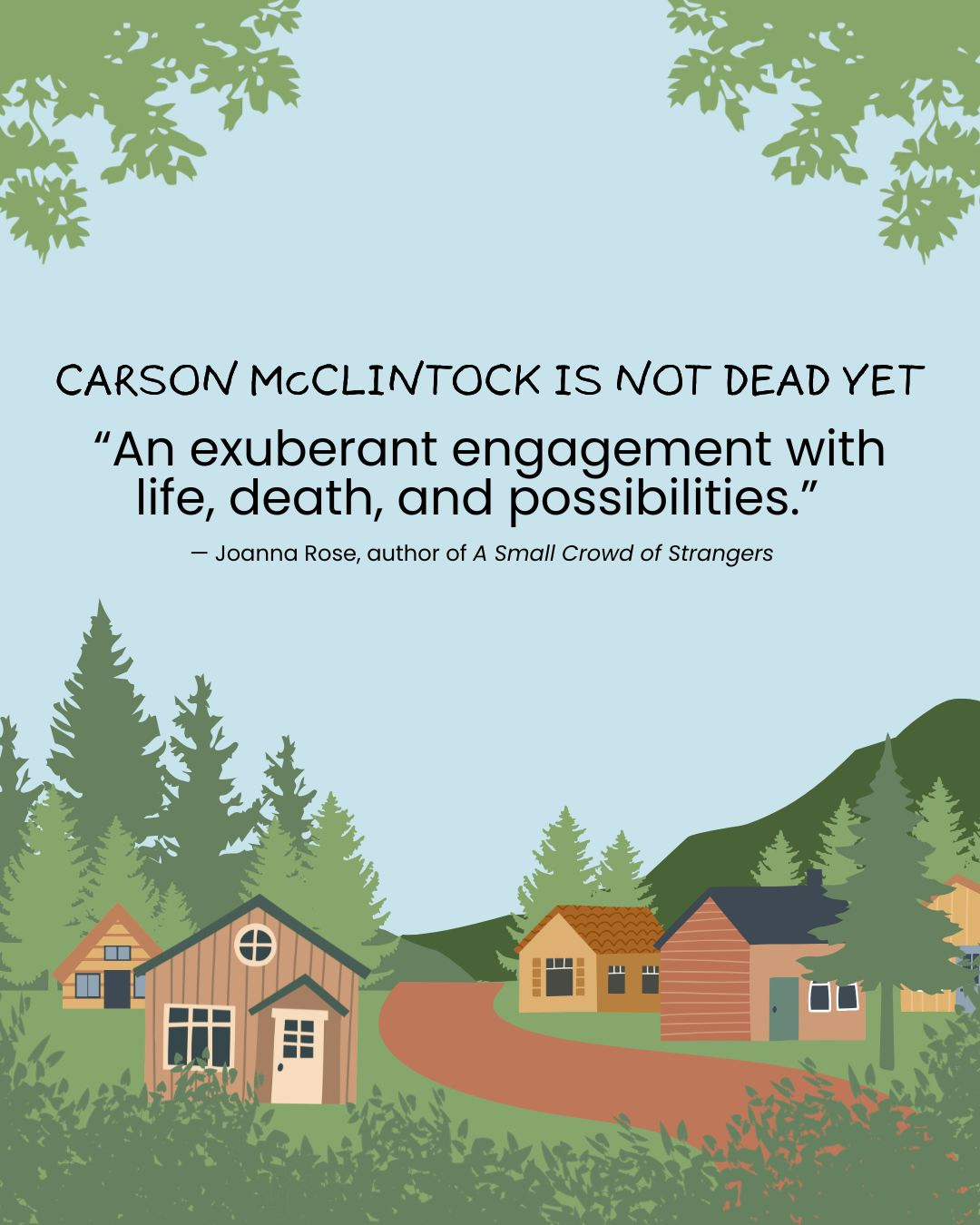
Part of author Joanna Rose’s generous endorsement for Carson McClintock Is Not Dead Yet.
Dad was private and buttoned-down, disinclined to self-disclosure. Yet in his waning weeks we shared several tiptoe-up-to-the-edge conversations about what might come after.
No Dad, I don’t believe in a literal heaven anymore, I said when he asked. I believe you’re going to wherever Mom is, and it will be beautiful. You’ll be dancing with her soon. Volare or Fly Me to the Moon.
Though I wish those exchanges had been wider and deeper, they were meaningful and now, oh so precious. I’m grateful for them.
*
I am familiar with a woman on social media whose husband recently died. Afterward, and even beforehand, she wrote long posts about how agonizing it was to lose him. How much she would miss him, and how much she did, now that he was gone. I do not know author Amy Ferris “IRL,” as the kids say—just on Facebook, where the algorithm gremlins see fit to feed me her musings. They touch my heart and mind with their humanity. I’m so glad she writes them.
I figure I see her stuff because while researching and writing a made-up story about the near-future leave-taking of my baby boomer brethren, I’ve been doing a lot of reading in that realm, and AI knows it. Simon Boas’s A Beginner’s Guide to Dying, Atul Gawande’s Being Mortal: Medicine and What Matters in the End, Alan Syliboy’s When the Owl Calls Your Name. I’ve found these books reflective, encouraging, informative, and important.
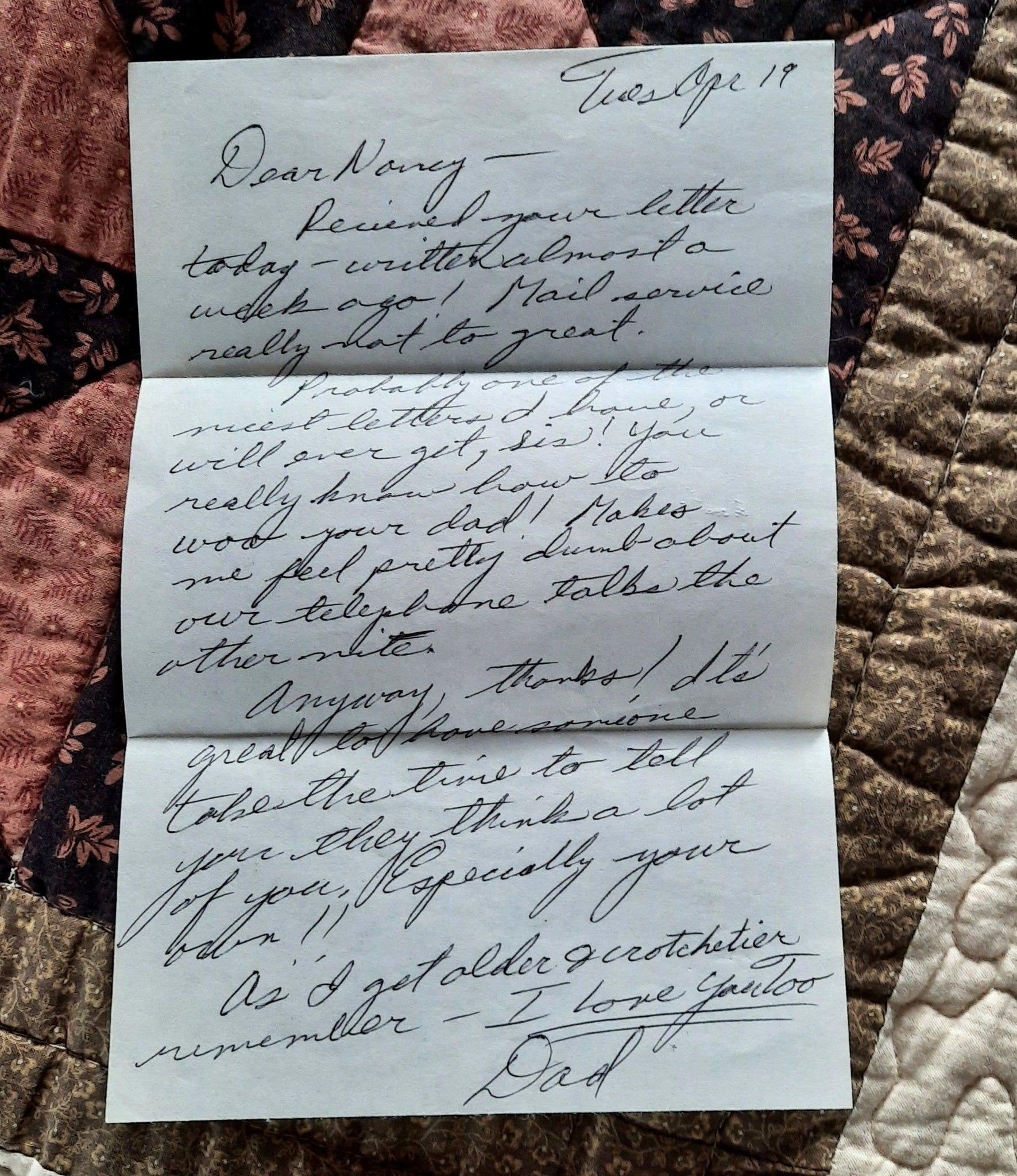
A letter Dad wrote to me after we fought on the phone when I was away at college in 1977.
I still talk to my father. The day I signed the book contract at a log cabin near Mount Hood. Each morning when I walk my dog on the path above the river. Every night when I’m in bed, facing southeast toward his resting place.
I whisper to him when my spirit flags, when I feel scared or unsure, when pain comes. He’s there, as sure as he’s in that photo.
Here’s to you, Dad, beyond the beyond. I hope my words echo pieces of your long journey home. Thank you for believing in me and for being proud of me. For teaching me to speak my love, to say the words whenever an opportunity arises, to demonstrate love in ways big and small, like you did.
I miss you in your absence. I feel you in your essence, living still in me.
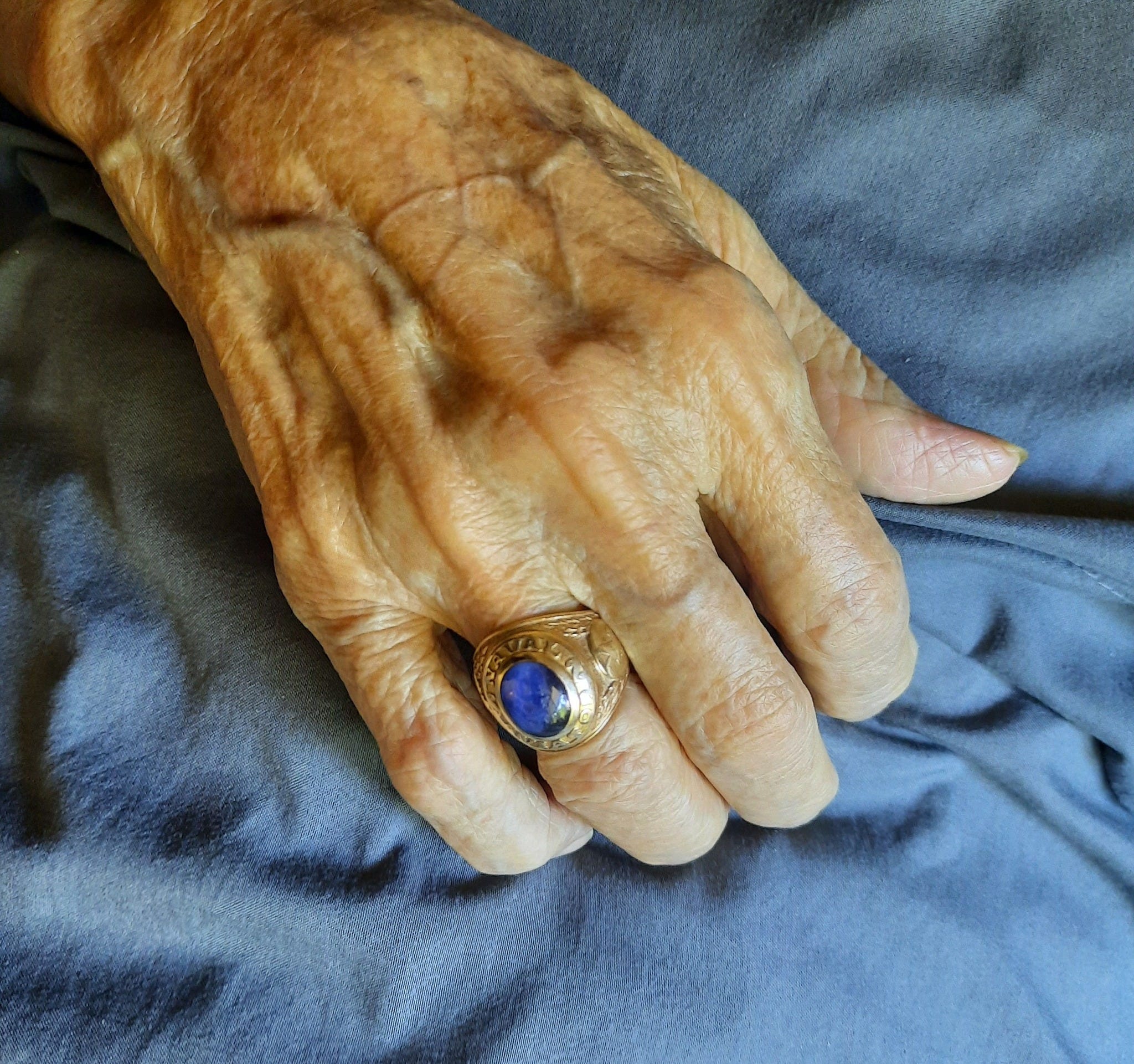
My father’s right hand a few days before he let go.